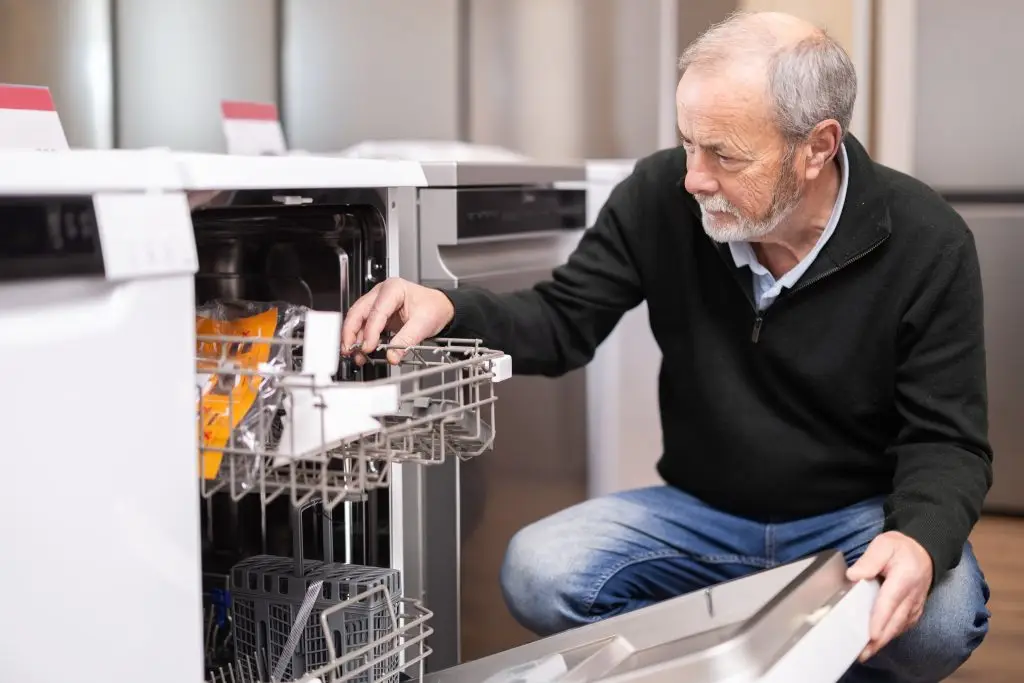
A dishwasher that leaves dishes cloudy, greasy, or with food particles still attached is one of the most frustrating appliance problems to deal with — especially because the fix is not always obvious. Before you assume the machine is broken and call for repairs, there are several things worth checking yourself. Many cleaning problems have straightforward causes that homeowners can resolve in under 30 minutes. Others point to mechanical faults that need a technician. This guide helps you tell the difference.
Start With the Spray Arms
The spray arms are the rotating components inside the dishwasher that spray pressurized water over your dishes during the wash cycle. Most dishwashers have two or three — one at the bottom, one in the middle, and sometimes one fixed at the top of the interior.
Pull the bottom rack out and locate the lower spray arm. Spin it with your hand — it should rotate freely with minimal resistance. Now examine the small holes along the arms. These holes clog with food debris and mineral deposits over time, especially in areas like Calgary where hard water accelerates scale buildup.
Use a toothpick or thin wire to clear blocked holes and rinse the arm under running water. Reattach it firmly so it cannot wobble during the cycle. Repeat the process for the middle spray arm. A partially blocked spray arm dramatically reduces water coverage, which explains why dishes near the back or top of a full load come out dirtier than those near the water source.
Check the Filter and Clean It
Every modern dishwasher has a filter assembly at the bottom of the tub. It catches food particles and prevents them from recirculating onto your dishes. When the filter gets clogged, water quality drops, spray pressure decreases, and dishes come out with a gritty or greasy residue.
Locate the filter — it typically sits near the base of the lower spray arm. Twist and lift it out, then rinse it under warm running water. For stubborn buildup, soak it in warm soapy water for 10 minutes and use a soft brush. Clean this filter every two to four weeks if you run the dishwasher daily. Many homeowners discover they have never cleaned it — and doing so alone resolves their cleaning problem entirely.
Assess Your Loading Technique
How you load the dishwasher matters as much as the machine’s mechanical condition. Dishes stacked too closely together block water from reaching their surfaces. Bowls and cups placed face-up collect standing water and do not drain. Pots placed on the lower rack can block the spray arm from rotating freely.
The general rules: place cups, bowls, and glasses face-down on the upper rack with space between them. Position plates on the lower rack angled slightly toward the centre so water reaches their surfaces. Keep tall items and cutting boards along the sides and back — not blocking the detergent dispenser or the spray arms. A properly loaded dishwasher with clean spray arms and a clean filter performs noticeably better than a poorly loaded one.
Check the Detergent and Rinse Aid
Using too little detergent, using detergent that has clumped from moisture exposure, or relying on pods that have absorbed humidity all contribute to poor cleaning results. Check that your detergent dispenser opens fully during the cycle — push it open manually when empty and confirm the mechanism springs open without sticking.
Low rinse aid is a common cause of spots and cloudiness on glasses. Most dishwashers display a rinse aid indicator. Refill it if it runs low, and increase the dosage setting if you notice persistent spotting. Calgary’s hard water makes rinse aid especially important.
Run the Hot Water First
When you start a dishwasher cycle, the machine fills with water from your home’s hot water supply. If that supply runs cold initially — because the hot water heater is far from the kitchen — the first fill of the cycle runs lukewarm, which reduces cleaning effectiveness. Run the kitchen tap until hot water flows before starting the dishwasher. It takes 30 seconds and measurably improves wash results.
When These Checks Do Not Solve the Problem
If you have cleaned the filter and spray arms, corrected your loading, confirmed detergent quality, and still get poor results, a mechanical or electrical fault is likely the cause. The most common culprits at this stage include a malfunctioning wash pump (reduced water pressure at source), a faulty heating element (water not reaching wash temperature), or a failing water inlet valve (not enough water entering the tub).
These faults need a technician’s assessment. Freedom Appliances offers dishwasher repair service with same-day availability and a $49 diagnostic fee that gets waived when you approve the repair. Technicians carry common parts for popular models, which means many pump and heating element repairs happen on the first visit.
The same team handles fridge repair, washer repair, dryer repair service, and oven and stove repair — so if other appliances in your home need attention, Freedom Appliances covers everything under one call.
A Note on Dishwasher Age
Dishwashers typically last 9 to 12 years with regular use. If yours is approaching or past that range and you are experiencing multiple issues simultaneously — poor cleaning, longer cycles, drainage problems, and unusual noises — the economics of repair versus replacement deserve a conversation. Freedom Appliances technicians give honest recommendations based on the specific fault and the appliance’s overall condition. There is no pressure to choose repair if replacement makes more financial sense for your situation.
Taking 30 minutes to run through the checks above costs nothing and often resolves the problem entirely. If it doesn’t, you will arrive at the service call better informed — which helps the technician pinpoint the fault faster.
FAQs
Q: How often should I clean the dishwasher filter? A: Every two to four weeks for households that run the dishwasher daily. If you run it less frequently, once a month is sufficient. If you notice dishes coming out with grit or residue, clean the filter immediately regardless of schedule.
Q: My dishwasher leaves white spots on glasses. Is that a cleaning problem or a water problem? A: Most likely a combination of both. White spots are typically mineral deposits from hard water. Increase the rinse aid dosage and ensure the rinse aid reservoir is full. A dishwasher cleaner run monthly helps as well.
Q: Can overloading actually damage the dishwasher? A: Not immediately, but blocking the spray arms repeatedly strains the motor and pump over time. It also produces consistently poor cleaning results that homeowners often misdiagnose as a mechanical fault.
Q: The detergent pod is not dissolving during the cycle. What causes that? A: Usually a blocked or sticky dispenser door. The door needs to open fully mid-cycle to release the detergent at the right time. Check the dispenser mechanism for food debris or physical damage.
Q: Is it worth repairing a dishwasher that is 8 years old? A: Generally yes, if the repair cost is less than half the replacement cost. Pump and heating element repairs on an 8-year-old machine are usually cost-effective. Freedom Appliances technicians can give you an honest breakdown during the diagnostic visit.