Freedom Appliances in Calgary hears about a dishwasher not drying dishes all the time, and it is frustrating to find when you open the door. The cause is rarely what people expect. Wet plates and pooled water on cups often come from a rinse aid issue, a weak heating element or a vent that no longer opens. This guide helps you work through the causes in a sensible order.
How a Dishwasher Dries Dishes
Dishwashers dry in one of a few ways. Many models heat the final rinse water, then let the hot dishes dry by themselves as steam escapes. Others use a heating element at the bottom of the tub. Some use a fan or a vent that opens at the end of the cycle.
Rinse aid plays a quiet but important role. It lowers the surface tension of water so droplets slide off the dishes instead of clinging. Without it, even a perfectly working machine can leave wet loads.
Understanding which method your machine uses tells you which part to suspect. The manual or the model sticker inside the door usually shows the drying type.
Common Reasons for a Dishwasher Not Drying Dishes
Most drying failures come from a short list of causes. Start with the simple ones, because they are quick to rule out.
- The rinse aid dispenser is empty or blocked
- A short or eco cycle was selected with heated dry turned off
- The load is packed too tightly for air to move
- The heating element has burned out
- The vent or fan has stopped working
- The high limit thermostat or control board has failed
An eco setting is a surprisingly frequent culprit. These cycles use cooler water and shorter heat, so plastic items in particular stay wet. Switch to a normal cycle with heated drying and compare the results.
Simple Checks to Do First
Begin with the rinse aid, because a dishwasher not drying dishes often just needs more of it. Open the small dispenser on the inner door and see whether it is empty. Refill it with a quality rinse aid, and set the dial to a medium level as a starting point.
Next, look at how you load the machine. Cups and bowls that face upward collect water in their hollows. Tilt them slightly downward and keep tall items from blocking spray arms or air flow.
Finally, try a different cycle. Run an empty normal cycle with heated drying, then open the door carefully when it ends. If the interior is hot and the dishes feel warm, the heating system is probably working. Cold dishes suggest a heating or control problem.
Dishwasher Not Drying Dishes After a Recent Change
Think about what changed recently. A new detergent brand, an all-in-one tablet or a different rinse aid can alter results. Tablets with built-in rinse aid often work poorly in hard water.
Hard water is common across Calgary and surrounding towns. Mineral film on dishes and in the tub can hold water in place. Our article on how hard water affects your dishwasher explains the buildup and how to manage it.
Symptoms, Causes and What to Do
Use this table to match what you see with the most likely fault. It also shows whether the fix is something you can try or a job for a technician.
| What you see | Likely cause | Next step |
|---|---|---|
| Water beads on glasses, plastic wet | Low rinse aid or eco cycle | Refill rinse aid, use heated dry |
| Everything wet, tub cool | Heating element failed | Technician tests the element |
| Everything wet, tub hot | Vent or fan not working | Technician checks the vent assembly |
| Wet only on the top rack | Poor loading or condensation | Reposition items, open the door after the cycle |
| White film on dishes | Hard water minerals | Clean the filter, run a descaling cycle |
| Cycle ends early | Control or thermostat fault | Technician tests the control board |
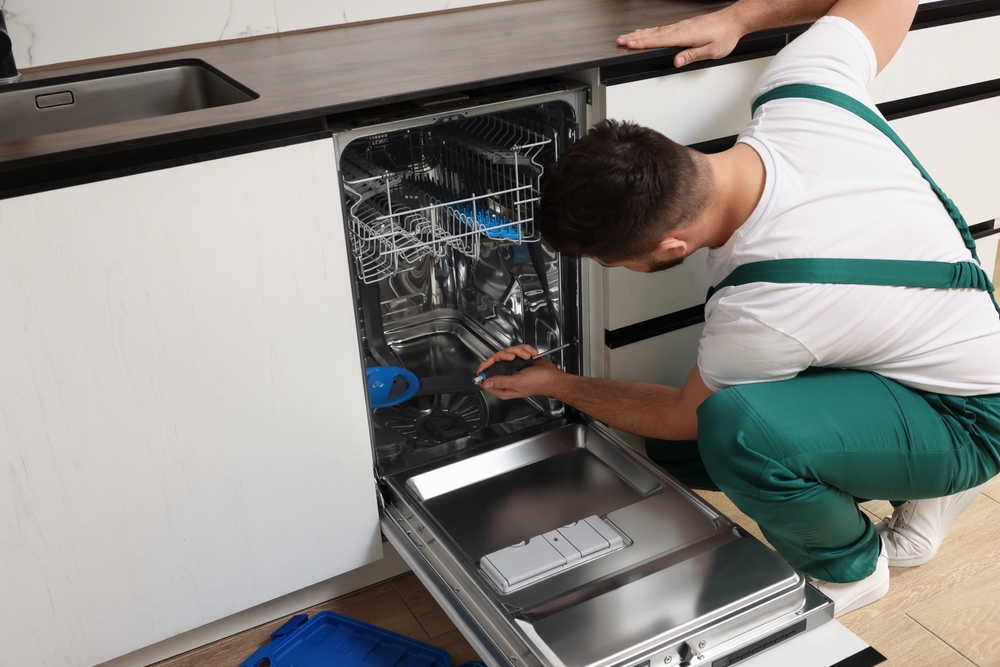
If the tub is cool at the end of a cycle and the element looks intact, a test with a multimeter settles the question. A burned element often shows a break or a blistered spot. Only a qualified person should handle this check.
Cleaning Steps That Often Help
A dirty filter and clogged spray arms reduce overall performance. Remove the lower rack and twist out the filter. Rinse it under warm water and scrub it gently with a soft brush.
Then check the spray arm holes with a toothpick. Mineral flakes and food bits block these small openings, and blocked jets leave water sitting on dishes. Wipe the door gasket and the tub edges as well.
Run a monthly maintenance cycle with a dishwasher-safe cleaner or a cup of white vinegar on the top rack. This clears light mineral buildup and keeps the water temperature stable. It will not fix a failed heating part, but it prevents small problems from stacking up.
When to Call a Technician
Call for help if you have tried the basics and you still have a dishwasher not drying dishes after every cycle. Heating elements, vents, thermostats and control boards sit behind panels that should stay closed unless you are trained. Water and electricity share the same space in a dishwasher, so caution matters.
Look for these signs that professional help is the better route:
- The tub stays cold at the end of a hot cycle
- You hear a click from the vent but nothing opens
- An error code appears on the display
- Water leaks around the door or the base
- The cycle trips a breaker
Our dishwasher repair page outlines what we service. You may also find our article on why a dishwasher runs longer than it used to helpful, since slow cycles often connect to heating faults. Your technician will give an honest quote after assessing the machine.
Getting Better Drying Results Long Term
A few habits keep drying performance steady. Keep the rinse aid topped up and use the right amount of detergent. Too much soap leaves residue, and too little leaves grease that repels water.
Use the heated dry option when you can, and crack the door open at the end of the cycle if your model lacks a fan. Let steam escape before you unload. Unload the bottom rack first so water from cups above does not drip onto dry plates below.
For general tips on running efficient dishwashers, see ENERGY STAR dishwasher guidance. It covers load sizing and cycle choices that save water and energy while still getting dishes clean.
Frequently Asked Questions
Why are my plastic items always wetter than the glassware?
Plastic holds less heat than glass or ceramic, so water does not evaporate from it as quickly. Rinse aid and a heated dry setting help the most.
Does a dishwasher need rinse aid to dry dishes?
Strictly no, but it makes a large difference. Rinse aid helps water sheet off the surface, so dishes dry faster and with fewer spots.
Is it safe to run the dishwasher if the heating element has failed?
It is usually safe, because the machine still washes. Dishes will stay wet, and the wash result may suffer from cooler water, so repair is advisable.
Can I replace the heating element myself?
We do not recommend it. The job involves disconnecting power and removing internal panels. A technician can replace it safely and test the machine afterward.
Contact Freedom Appliances in Calgary
If your dishes keep coming out wet, we can find the fault and explain your options. Call us at (403) 889-6068 to book a visit.
- Address: 12447 17 St SW, Calgary, AB
- Hours: Monday to Friday 8:00 AM to 8:00 PM, Saturday 9:00 AM to 5:00 PM, Sunday closed